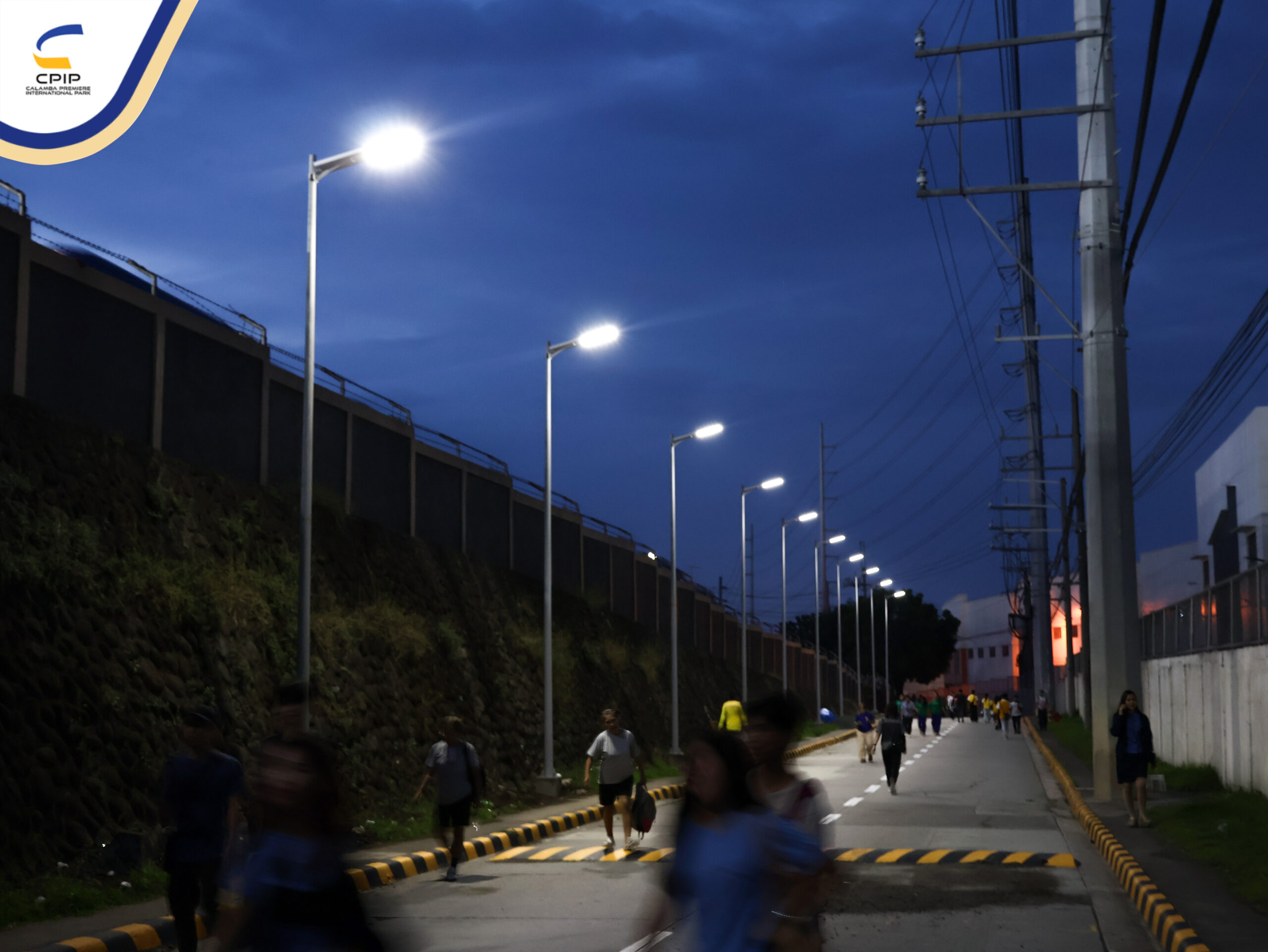
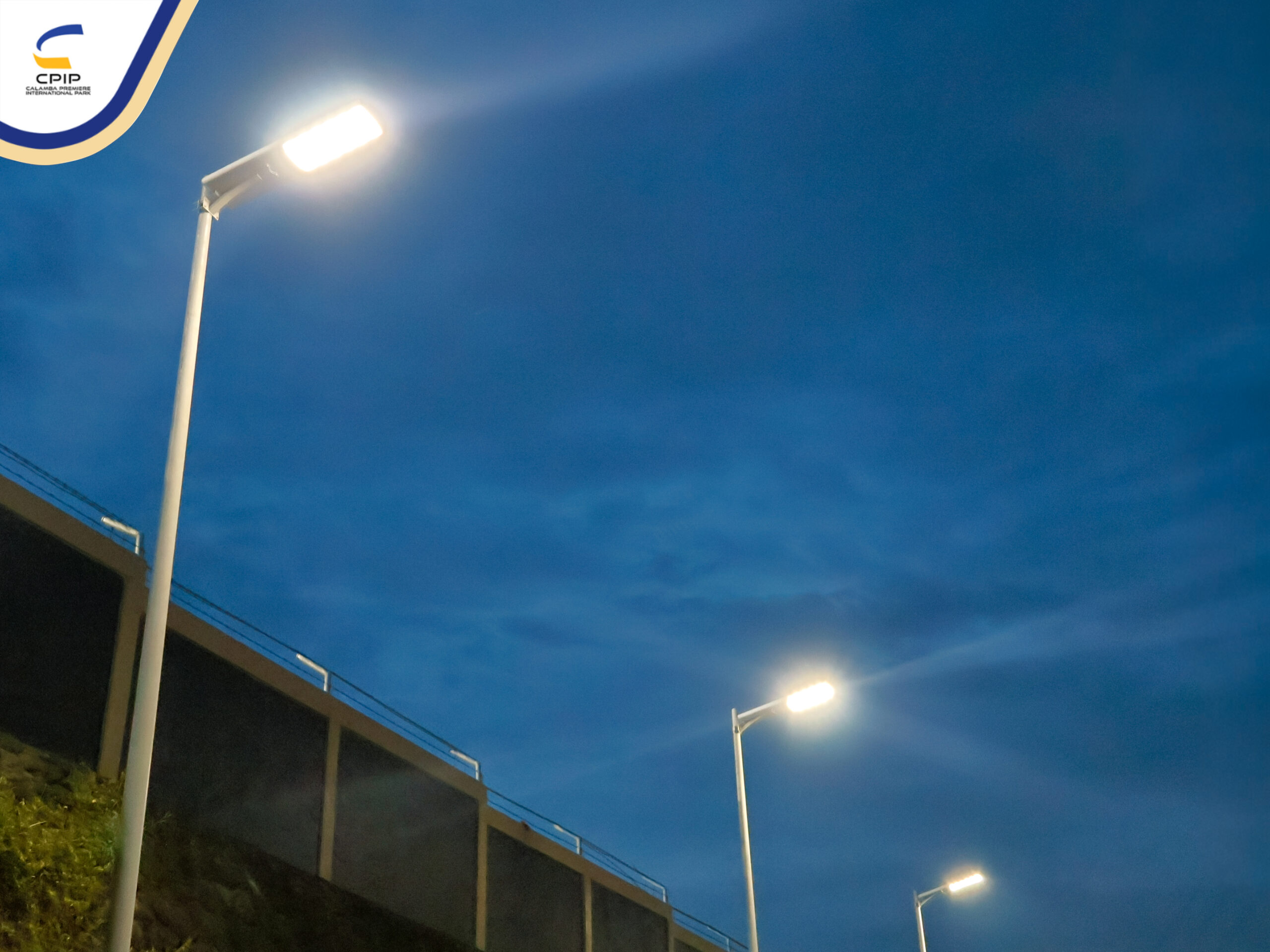
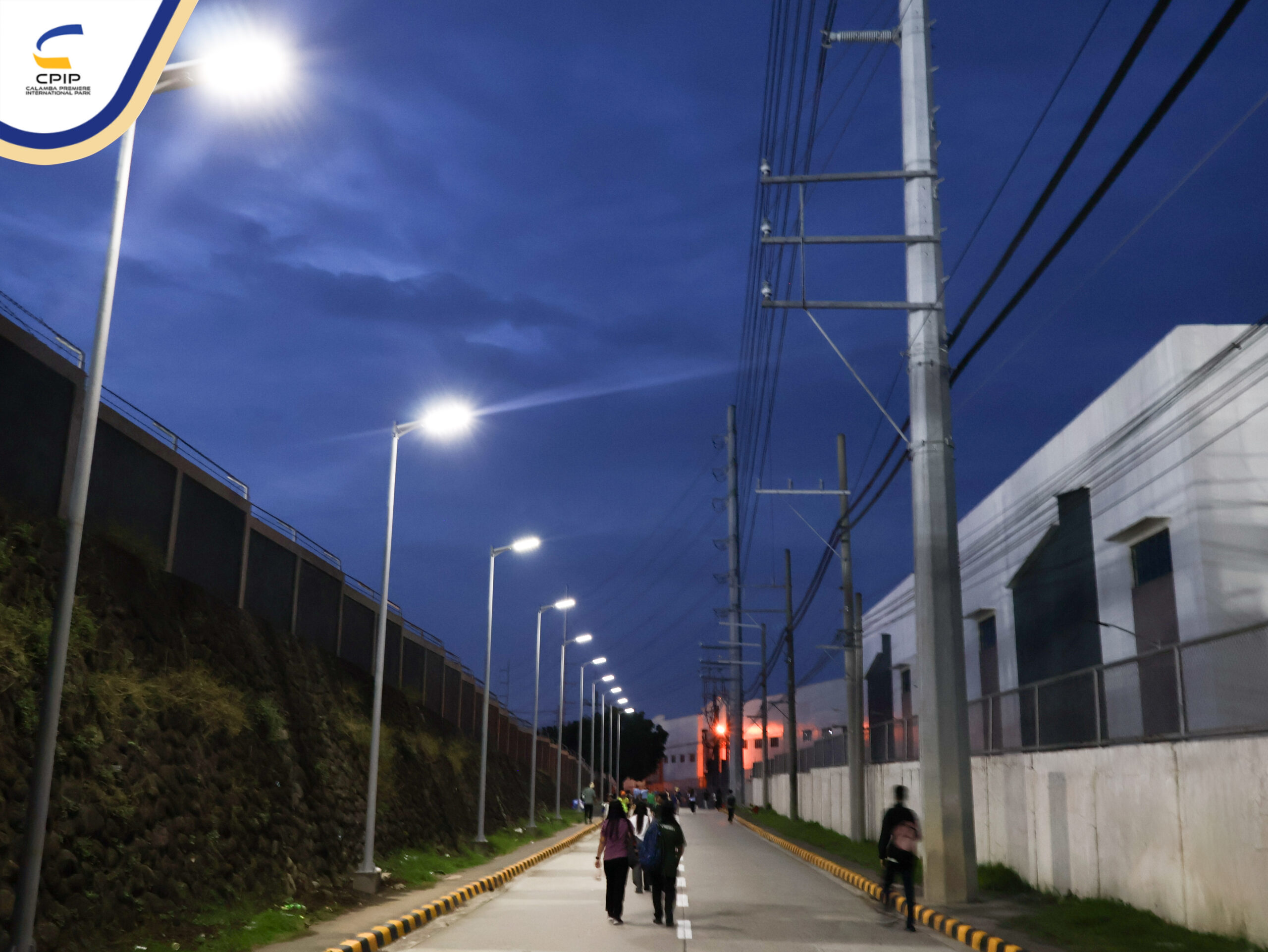
CPIP is strengthening the efficiency of its park infrastructure through its Solar-Powered Lighting Project, converting existing streetlights along the CPIP Road near Gate 2 to solar-powered systems.
The initiative began in July 2026, with the first units becoming operational in the second week of August. To date, 33 solar-powered streetlights are operational, with 11 additional units currently under installation, bringing the project to a total of 44 streetlights in the area.
The project upgrades the area’s existing lighting infrastructure. Previously, fewer streetlights were installed along the road, with fixtures mounted on adjacent walls. Under the new setup, dedicated streetlight posts have been installed to accommodate additional lighting points and provide broader illumination across the area.
From Existing Infrastructure to Solar Power
The new streetlights are equipped with solar panels that collect energy from sunlight during the day and store it in rechargeable batteries for use whenever lighting is needed. Rather than operating on a fixed schedule, the system automatically activates when surrounding light levels become sufficiently low, allowing the lights to respond to actual conditions.
By generating electricity on-site through solar panels, solar-powered streetlights can reduce the amount of conventional electricity needed to operate the lighting system. This allows the upgraded streetlights to make use of renewable energy while reducing their dependence on conventional power. The Department of Public Works and Highways (DPWH) has likewise identified energy conservation among the advantages of solar-powered roadway lighting.
The conversion also provides an operational advantage through lower maintenance requirements. The solar-powered units require less maintenance than the previous setup, while their self-contained power system reduces reliance on conventional electrical infrastructure.
Together, these features make the conversion a practical infrastructure upgrade—improving the way the streetlights are powered while reducing their dependence on conventional electricity and maintenance requirements.
Improving the Environment
Along CPIP Road near Gate 2, the installation of additional streetlights and dedicated posts provides broader coverage than the previous setup. With more lighting points distributed across the area, the upgraded system provides illumination across a wider portion of the road.
This is particularly important during periods of low light, when employees may have less visibility of the road and their immediate surroundings. Better illumination allows them to see their path more clearly, be more aware of nearby people and activity, and move through the area with greater confidence.
The improvement also supports employees who arrive early, leave later, or move between areas of the park when natural light is limited. Maintaining adequate lighting in these conditions is a practical part of creating a safe and functional workplace environment.
The project therefore brings together two practical improvements: a more efficient approach to powering the streetlights and better visibility for the people who use the area every day.
Integrating Sustainability into Park Operations
The project demonstrates how environmental considerations can be incorporated into routine infrastructure improvements. The decision to use solar power allows a renewable energy source to become part of an existing park facility while maintaining its essential function.
The environmental value comes from making use of a renewable resource as part of the park’s regular operations. Rather than treating sustainability as a separate initiative, the project incorporates it into an infrastructure decision that also addresses energy use, maintenance, lighting coverage, and the needs of employees.
This approach is particularly relevant in an industrial park, where infrastructure must remain functional and reliable while resources are used responsibly. Environmental considerations can be built into the way facilities are planned, upgraded, and operated without compromising their intended purpose.
The installation along CPIP Road near Gate 2 provides a practical example of this approach. It improves an existing facility while introducing renewable energy into its operation, showing how infrastructure improvements can address present needs while taking environmental considerations into account.
As CPIP continues to improve its facilities and infrastructure, projects like this provide opportunities to integrate responsible resource use into everyday park operations. The goal is not simply to add new technology, but to make infrastructure decisions that support both operational needs and environmental responsibility.