Navigating the Future: The Philippine Economic Landscape in 2025

The Philippine economy is set for sustained growth in 2025, driven by robust domestic demand, strategic public investments, and a youthful, dynamic workforce. While these factors fuel optimism, there are also potential risks that require careful management, including external economic uncertainties and the country’s vulnerability to environmental challenges. Both international and domestic institutions forecast positive economic growth for the Philippines in 2025. The Asian Development Bank (ADB) projects a 6.2% GDP growth along with Vietnam, with an inflation rate forecasted at 3.2% this year, citing moderating inflation, monetary easing, and public infrastructure spending as key drivers. Similarly, the World Bank anticipates a 6.1% GDP growth, underscoring the importance of strong domestic demand and ongoing public investments in fueling economic activity. According to John Paulo Rivera, a Senior Research Fellow at the Philippine Institute of Development Studies, prediction shows that the midterm elections in 2025 are expected to provide a temporary economic boost. Campaign spending will benefit key sectors such as manufacturing, construction, and services. But this is to take note that this growth is fleeting, highlighting the importance of electing leaders who can sustain momentum through strategic policies and productive investments in infrastructure, education, and healthcare. Several factors will drive the Philippine economy’s expansion in 2025. A record ₱6.33 trillion government budget, heavily allocated to infrastructure and education, is expected to create jobs, stimulate economic activity, and enhance productivity. Infrastructure improvements will further support business operations and growth across multiple sectors. Additionally, the country’s young and growing population, paired with rising employment rates, will boost domestic consumption, driving demand for goods and services in retail, technology, and other industries. The Business Process Outsourcing (BPO) sector will remain a cornerstone of the Philippine economy. With global demand for outsourcing services continuing to grow, the BPO industry will attract significant foreign investments and create employment opportunities, reinforcing the country’s position as a leading outsourcing hub in Asia. Despite these positive indicators, risks remain. The Philippines is highly vulnerable to severe weather events like typhoons, which could disrupt agricultural production and damage infrastructure. Global economic uncertainties, such as geopolitical tensions and fluctuating commodity prices, may also impact trade and investment flows. Inflation is another concern; while it is projected to stabilize at 3%, unexpected price surges could prompt tighter monetary policies that might hinder consumer spending and investment. The election season this 2025 presents a critical opportunity to lay the groundwork for sustained economic growth. Beyond the immediate lift provided by election spending, policymakers must implement reforms that enhance the ease of doing business, attract foreign investments, and strengthen local industries. Most importantly, economic growth must be inclusive, addressing poverty, improving wages, and providing access to basic services to ensure that its benefits reach all Filipinos. Strategic public investments and robust local demand are driving the Philippine economy’s positive trajectory in 2025. The Philippines can set the stage for a peaceful and prosperous future for its citizens by concentrating on long-term reforms and making well-informed election judgments and attaining equitable and long-lasting growth necessitates tackling environmental issues, managing world unpredictability, and putting in place sensible regulations.
CPIP’s Christmas Carnival: Where Family Meets Festivity
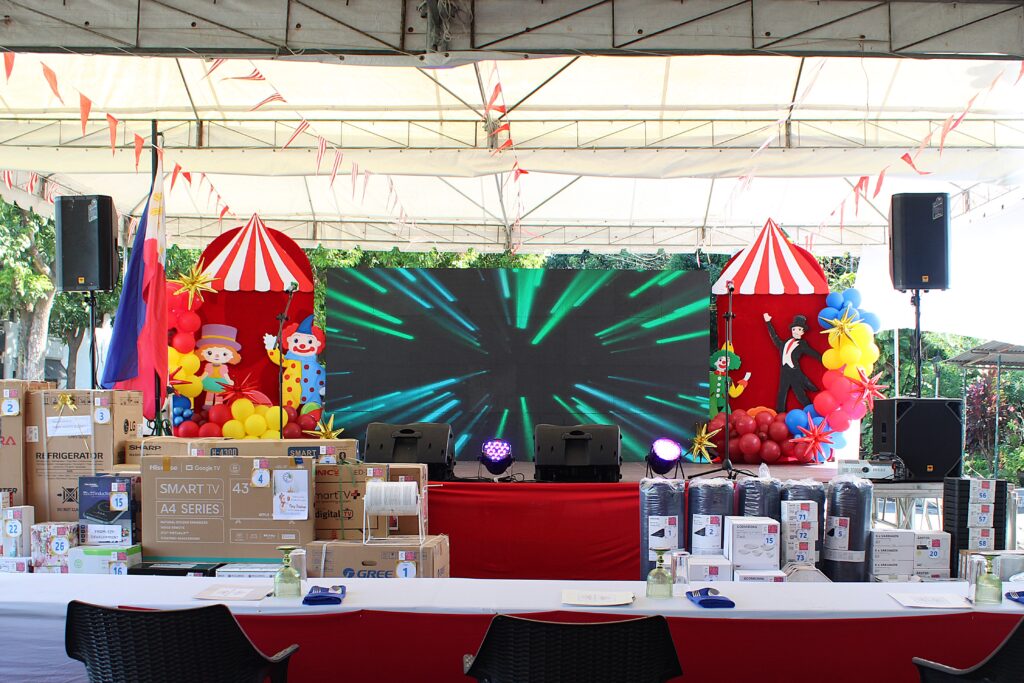
On December 14, 2024, Calamba Premiere International Park brought the holiday magic to its employees and their family members through a festive Christmas Carnival-themed party. The event commenced with an opening speech from CPIP Admin Head, Ms. Michaela Nucup, who extended her Merry Christmas greetings and reminded everyone to treat the day as a celebration of dedication and camaraderie. The atmosphere was filled with joy and excitement as host Carla Bianca led the crowd in fun-filled party games, especially for the children. The energy reached new heights during the highly anticipated CPIP Got Talent competition, where five departments showcased their unique talents. The Environmental Relations Department (ERD) kicked off the performances, bringing energy to the stage in their casual sleeveless sandos, red shorts, and festive Santa hats. They were followed by a lively Disney parody from the Marketing Department. The Human Resource Department, who secured second place, dazzled the crowd with an energetic dance routine in their vibrant rainbow skirts. The Admin Department, crowned CPIP Got Talent champions, kept the momentum going with an impressive flag dance and majorette performance. Finally, the Accounting Department, who earned third place, brought the event to a spectacular close with a spirited sing-and-dance performance. After the CPIP Got Talent performances, the spotlight shifted to the children of employees, who took the stage for their own talent competition. These young performers, though small in size, impressed everyone with their remarkable skills, especially in dance. However, one performer truly stood out—demonstrating exceptional gymnastic ability that captivated the audience. Her impressive routine earned her first place in the competition. In addition to the performances and games, the event became even more exciting as CPIP held the draw for 75 minor raffle prizes and 30 major prizes, adding an extra layer of anticipation and joy to the festivities. This event was not just a celebration of the employees’ hard work throughout the year, but also a special opportunity for them to bond with their families. The children brought by the employees clearly had a fantastic time, with their loot bags filled with treats and their faces lit up with joy as they enjoyed the inflatable bounce house. The celebration was also graced by several distinguished guests, including Honorable Calamba City Councilor Saturnino Lajara, who delivered a warm greeting and a brief yet heartfelt speech to everyone in attendance. Atty. Rajay Lajara also shared a brief but meaningful message and served as a judge for the event’s talent shows alongside his brother, Atty. Billy Lajara, and Mrs. Van Po, wife of CPIP General Manager Mr. Carlos Po. Atty. Lajara took a moment to reflect on CPIP’s impact, saying, “Napakaswerte po ng atin pong lungsod at merong CPIP dahil para po sa akin, CPIP is more than just an industrial park. It’s more than just a company. Para po sa akin, the way that our GM is running it, it is already an institution dito po sa ating lugar na aside po sa pinoproduce ng ating industriya, pagbigay ng employment, ay napakabukas-palad naman po ng CPIP ,” He encouraged the audience to give a round of applause to Mr. Po for his vision and leadership. (Our city is very fortunate to have CPIP, because for me, CPIP is more than just an industrial park. It’s more than just a company. For me, the way our General Manager is running it, it has already become an institution in our area. Aside from what our industry produces and the employment it provides, CPIP is also very generous.) As the event nears its conclusion, Mr. Carlos Po reflects on the impactful words of the CPIP Chairman in his closing remarks, “Lagi niya sinasabi sa amin ‘wag na ‘wag kalimutan ang isang araw na pinakaimportante sa mga empleyado natin: ‘yan yung araw ng Pasko. Kase ito ang araw na magkakaroon tayo ng pagkakataon na magsama-sama, kumain, at magsalo-salo lahat.”Mr. Po expressed his heartfelt gratitude to the employees for their unwavering commitment to CPIP. (He always tells us never to forget one of the most important days for our employees — and that is Christmas Day. Because it’s the day we get the chance to come together, to eat, and to celebrate with one another.) The CPIP Christmas Carnival was a heartwarming success, bringing together employees, their families, and distinguished guests in a celebration of unity and festive spirit. From lively performances to exciting games, the event was a perfect blend of fun and recognition. The talent showcased by both employees and their children, along with the raffle draws and inspiring speeches, made the day truly memorable. This celebration not only highlighted CPIP’s strong sense of community but also reaffirmed the company’s commitment to supporting both its workforce and the local city of Calamba.
The Rise of Laguna: How the Province Emerged at the Forefront of Philippine Provincial Economy

The Philippine Statistics Authority (PSA)-CALABARZON reported last November 14, 2024, that Laguna accounted for the largest share of Gross Domestic Product among the country’s 82 provinces. With 3.9 percent growth, rising from PHP990.44 billion in 2022 to PHP1.029 trillion, Laguna was acknowledged as the top provincial contributor to the country’s GDP in 2023. According to the report by Laguna Provincial Statistical Office chief statistical specialist, Magdalena Serqueña during the Provincial Product Accounts Dissemination Forum, the sectors contributing to Laguna’s economic growth are the following: 1. Industry Sector Laguna has become home to numerous manufacturing businesses, especially due to the presence of large industrial zones and economic zones like Calamba Premiere International Park. The industrial parks draw in both domestic and foreign investors, significantly impacting the province’s GDP. Prominent multinational corporations, particularly in the electronics field (e.g., Samsung) and in automotive production (e.g., Toyota), have set up operations in Laguna. According to the report by Serqueña, the industry sector showed 60 percent growth from its 2022 level. 15 out of 16 among Laguna’s production industries contributed to the economy’s growth. Through creation of job opportunities, exports, and technological innovation, the economic growth is driven by the industrial sector. 2. Retail and Commercial Sector With 0.89 percentage points contributed to Laguna’s 3.9 percent growth rate, The retail sector in Laguna is experiencing significant growth, driven by the expanding middle class and its close proximity to Metro Manila. Shopping centers, such as SM Calamba, have contributed positively to retail consumption. This increase in retail establishments is closely associated with the rising demand for goods and services from the growing urban population. The retail sector plays a crucial role in stimulating local consumption, generating employment opportunities, and fostering growth in commercial real estate. 3. Real Estate and Property Development Real estate and ownership of dwellings contribute to Laguna’s economic growth with 0.47 points through boosting construction, retail, and service sectors, and attracting long-term investments. Laguna’s strategic location near Metro Manila has established it as an ideal location for real estate development. The growth of Nuvali, a sustainable mixed-use development in Sta. Rosa, along with other residential communities, has propelled both real estate investment and infrastructure growth. Additionally, business process outsourcing (BPO) centers are emerging in locations such as Biñan and Calamba. 4. Service Sector The service sector recorded a 38.5 percent growth from the 2022 Laguna economic structure. Included in this sector are tourism and hospitality, educational institutions, and the Business Process Outsourcing (BPO) sector. With Laguna’s proximity to Metro Manila, its appeal as a destination for both local and international tourists is enhanced. Notable attractions such as Enchanted Kingdom in Santa Rosa and Pagsanjan Falls draw significant interest, while the province is also renowned for its hot springs, particularly in Pagsanjan and Lucban. Furthermore, lifestyle malls like Nuvali and Solenad have emerged as prominent commercial destinations. Also, Laguna is home to esteemed universities and institutions such as the University of the Philippines Los Baños (UPLB), Polytechnic University of the Philippines, and Colegio de San Juan de Letran. The BPO industry is experiencing growth, particularly in cities like Santa Rosa, where numerous call centers and IT firms have established operations due to the availability of skilled labor and proximity to Metro Manila. 5. Agriculture, Forestry, and Fishing (AFF) With its fertile land utilized for the cultivation of rice, vegetables, fruits, and various other crops, Agriculture remains a crucial component of Laguna’s economy with 1.5 percent growth from its 2022 level. Laguna’s agri-business sector is also experiencing growth, supported by increasing investments in food processing. Additionally, the province boasts a robust aquaculture industry in Laguna de Bay, which facilitates fish farming and related enterprises. In conclusion, Laguna has established itself as a leading contributor to the Philippine economy, representing the largest share of Gross Domestic Product among the country’s provinces. With an impressive GDP growth of 3.9 percent, fueled by key sectors such as manufacturing, retail, real estate, services, and agriculture, the province exemplifies a diverse and dynamic economic landscape. With these multifaceted growth drivers, a balanced economic ecosystem is created in the province of Laguna. The economic performance of Laguna in 2023 highlights its integral role in the national economy and underscores its potential for sustained growth in the years ahead. The province’s strategic advantages—including industrial hubs, robust infrastructure, a skilled labor force, and abundant natural resources—position it as a significant contributor to the country’s economic development.
Our Lady of Fatima Parish LCM: Journey 2024 Team Building Seminar
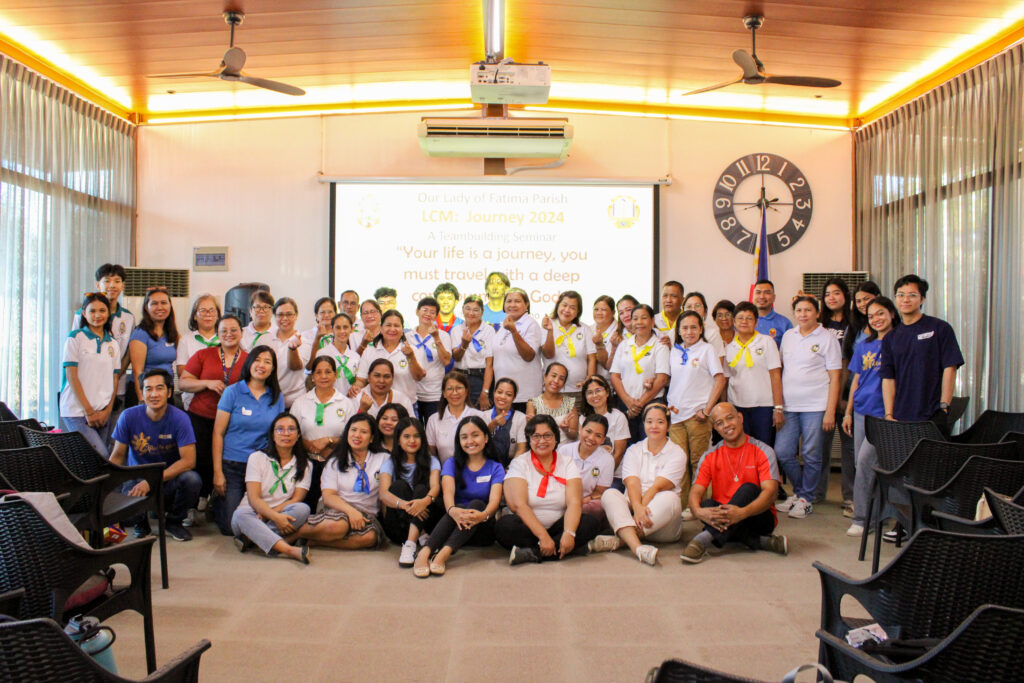
“Your life is a journey, you must travel with a deep consciousness of God.” With this theme in mind, Our Lady of Fatima Parish held their team building seminar at the CPIP Function Hall last November 9, 2024, over a year after hosting their 1st Music Ministry Team Building at the same venue. By engaging in various activities such as sharing their faith journeys and participating in cooperation-testing games, the seminar attendees were able to strengthen their connections while deepening their faith. Indeed, the journey lies not in the destination we aim for, but in the company we keep throughout our travels. Surrounding ourselves with positive individuals and integrating virtue in our life’s journey ensures a worthwhile experience, leading us to a destination beyond our expectations. Check out the photos here: LCM: Journey 2024
CPIP’s Role in Bridging the Gap between Science and Society

Calamba Premiere International Park, as an industrial park, plays a significant role in underlining the relevance of science in society. Through providing infrastructure for science-based industries, acting as hubs for innovation, and the commercialization of scientific knowledge, a collaborative environment between science and industry is created, leading to benefits for both economic growth and societal well-being. Here are several key ways in which CPIP highlights the importance of science in contemporary society: Establishing Facilities for Innovation-Driven Industries CPIP has been home to technology-based multi-national companies. These organizations integrate innovation and research and development in their daily operations, translating scientific understanding into practical applications. CPIP brings together innovative minds, creating opportunities for the cross-pollination of ideas and the rapid dissemination of scientific knowledge and innovations into commercial applications. Through the scientific initiatives within the Park, practical solutions are offered to address societal challenges, striving to enhance the quality of life. Companies like Baekgeum Philippines Corporation (BGPC) are equipped with cutting-edge facilities for the production of their innovative and practical products such as radar detectors, two-way radios, and outdoor GPS. Supporting the Development of Sustainable Practices CPIP advocates for the integration of sustainability across all functions within the Park. One of our locators in the Park, Avon, is embarking on an ambitious journey to minimize the environmental impact of their packaging. Avon is reducing their use of virgin plastic and intends for 100% their packaging to be reusable, recyclable, or compostable by the year 2030. Additionally, CPIP maintains a centralized water supply system and a sewage treatment plant, and is committed to providing cost effective environmental management services for all locators. Such incorporation of sustainability into practice is encouraged within the Park to show the social value of science in addressing environmental challenges and to set an example for society on how scientific advances can be harnessed to address global issues. STEM-Driven Workforce Development By focusing on science-driven industries, CPIP foster the creation of high-quality jobs that require specialized knowledge, encouraging young individuals to pursue careers in science, technology, engineering, and mathematics (STEM). This heightens the demand for STEM education and aids in bridging the gap between academic learning and the employment landscape, thereby enhancing the relevance of science to society at large. Promoting Health and Safety Innovations CPIP has an on-site clinic extending an immediate medical care to anyone in need within reach. The clinic is open for all employees, visitors, locators, and to the public as well. In this way, CPIP acts as a bridge between science and healthcare, emphasizing the importance of science in improving societal well-being. Stimulating Economic Growth By drawing in businesses from both the national and international spheres,, CPIP contributes to fostering economic growth at both the regional and national levels.. Science-driven companies lead to development of high-value products and services that fuel economic progress. This way, CPIP reinforces the critical importance of science in shaping the modern economy. In summary, science can be regarded as the epitome of progress from the past to the present. Its contributions to economic development and solutions for global issues are undeniable, highlighting the crucial impact science has had on our lives. As we celebrate World Science Day for Peace and Development, let us reflect on our history to appreciate how far we have advanced through science and consider the potential for further progress. As science continues to advance, CPIP will persist to provide a vital link between the scientific community and the broader society, allowing more individuals to understand why science matters, how it improves the quality of life, and how it empowers our future.
HTS Corporation Shares their Approach to Maintaining Safety in their Workplace

In anything we do, ensuring safety must be among our top priorities. Our efforts for growth and success serve no purpose if we neglect safety. At CPIP, we value safety in our everyday practices and commit to raising awareness about it. We had the opportunity to speak with one of our locators, High Tech Solutions Corporation, and personally witness their dedication to promoting safety awareness in their work environment. HTS Safety and the People Behind It Safety in HTS Corporation is overseen by their safety committee which is comprised of most of the core officers within the company. This committee is headed by the company’s Safety Officer and Facility Supervisor, Mr. Luis Rolando Tribo II. In our interview with Mr. Tribo, he mentioned that the safety committee of the company participates in Basic Occupational Safety and Health (BOSH) and Construction Occupational Safety and Health (COSH) training sessions to gain the necessary knowledge required for their roles in ensuring the company’s adherence to Occupational Health and Safety (OHS) guidelines and in protecting the well-being of employees. “Safety officers is a must, so we have BOSH and COSH, for example, radiation safety, BFP related trainings, similar matters,” said Mr. Tribo. In addition to this, workplace safety is also incorporated into the discussions held during the 8-hour New Employee Orientation to equip the employees with essential knowledge. Furthermore, the company also has first aid responders who undergo training every three years. As safety is a shared responsibility, it is important for everyone to have a comprehensive understanding and awareness of the company’s safety protocols. HTS’s Safe-fficiency “It’s a delicate balance,” Mr. Tribo stated on maintaining a balance between safety and efficiency in the workplace. “Sa tingin ko, nakukuha ko yung tamang balance, they are safe enough but we can produce fast enough,” he added. Personal Protective Equipment (PPEs), safety visual aids, and planned responses to emergencies are some of HTS’s efforts to keep this safe-fficiency balance in the company. “When I started in February (this year), I implemented most of what they need. When I started, they haven’t used laser goggles yet, but we have a laser welding machine here. (However) they just used ordinary goggles. Having trained with radiation safety, I know the difference of lasers to an ordinary-like. That’s why I introduced the laser goggles. A bit expensive but necessary,” Mr. Tribo explained. He also stated that as an injection molding company, all of the PPEs that HTS Corporation needs are the basics only such as safety shoes, gloves, hairnets, safety helmets, earmuffs, and earplugs. “No need for high ends,” he added. When asked about safety visual aids, “A lot,” Mr. Tribo answered. HTS Corporation has infographic posters on ergonomic safety, earthquake safety, electrical safety, and fire safety. Emergency exits have illuminated signs so they can be easily seen. There is also a labeled emergency eyewash station in the production area. However, there is one safety visual aid that Mr. Tribo proudly introduced as “unique in a way that in CPIP, this is the only place that I implemented it.” These are the moon-shaped floor markers indicating door arcs. This is necessary to avoid potential hazards of door openings such as striking someone positioned near the door or obstructing the pathway with boxes. In the event of emergencies, Mr. Tribo stated that HTS Corporation has documented procedures outlining their planned responses based on the type of emergency. Part of their emergency preparation is the monthly inspections of all the fire extinguishers throughout the company. 5S+S Audit Program Every month, Mr. Tribo and the committee conduct one round of safety assessment through their 5S Plus Safety Audit Program. This internal audit involves participation from all departments, which are evaluated using a checklist that grades them based on their adherence to 5S + S practices. 5S is a workplace organization method based on five Japanese words: “sort,” “set in order,” “shine,” “standardize,” and “sustain.” Adding safety makes it 5S + S or 6S as regarded in other companies. Through this method, HTS Corporation has been effectively achieving a balance of safety and productivity within the workplace. 5S + S has become HTS’s way to establish visual order and to ensure that safety is being practiced in their daily operations. However, Mr. Tribo mentioned that there is one thing that the employees struggle with based on the results of their 5S + S Audit Assessment. “In our Excel file, there’s a pictogram, (the thing the employees fail at is) mostly sustaining. They can start (preparing for the assessment) before the audit (such as) basic cleaning up, but they cannot sustain it after a day or two.” Workplace safety is part of a company’s investment. Commitment to ensuring safety is long-term guarantees a good future for both the company and its employees. Workplace safety goes beyond being a regulatory obligation; it’s a fundamental aspect of a productive and healthy work environment. Prioritizing safety at work protects employees, minimizes risks, and improves overall organizational performance. At HTS Corporation and throughout CPIP, we foster a safety-oriented culture as we believe that if we prioritize safety today, we are rewarded with a tomorrow.
Empowering Preparedness through Exercise Design Training
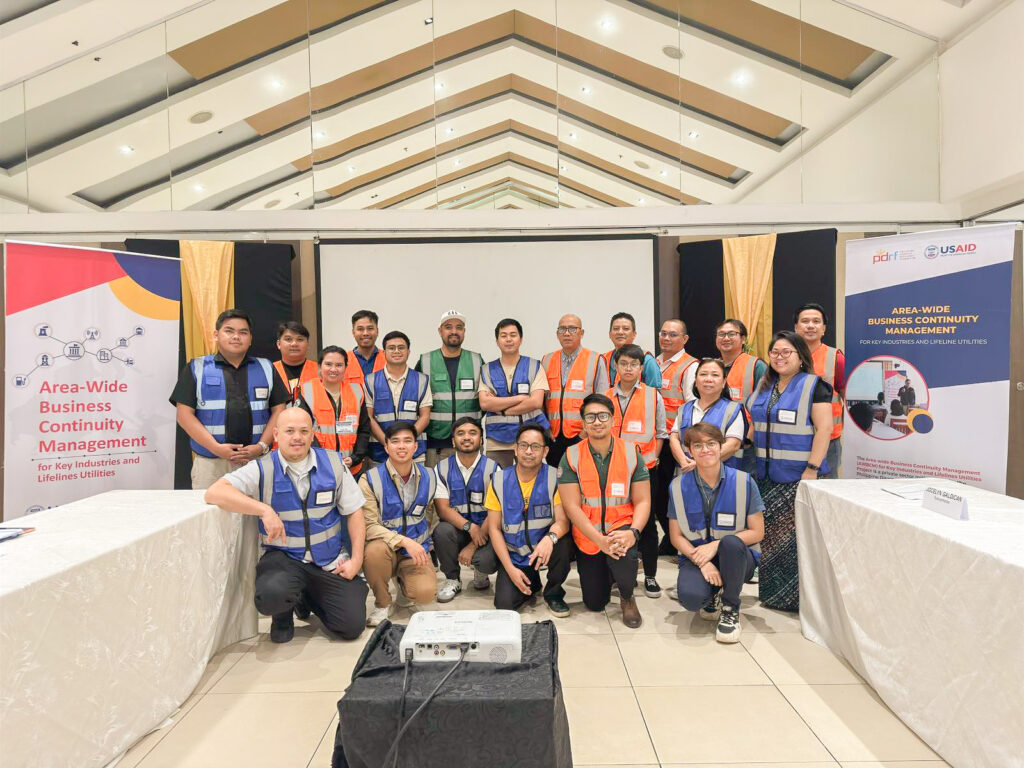
Last October 07 to 11, 2024, CPIP’s Water Maintenance Engineer and Pollution Control Officer, Sir Jaycee Norona and Michael Eusebio respectively, attended the Philippine Disaster Resilience Foundation or PDRF training called Exercise Design course, with this course, developing skills to design, implement and assess is essential for enhancing safety and efficiency and health in today’s dynamic workplace. This comprehensive training, centered on interactive lectures, hands-on workshops, and return demonstrations to strengthen the team’s preparedness and collaborative potential. Interactive Engagement The course employed interactive discussions and hands-on workshops, fostering a collaborative environment where participants exchanged insights and learned together. This approach ensured practical engagement, enhancing learning retention and making theory actionable. Defining Roles for Effective Exercise Design A key takeaway from the training was the importance of role clarity in exercise design. In a tabletop exercise, Jaycee assumed the role of Exercise Director, experiencing firsthand the challenges of coordination and communication. Mike’s role in overseeing health and safety exemplified the impact of precise role delegation on ensuring safe and efficient exercises. Bringing Theory into Practice One of the courses’ highlights was the “return demonstration,” where attendees applied theoretical knowledge to real-life scenarios. This practical application solidified key principles of exercise design, allowing Jaycee and Mike to gain a clearer understanding of both planning and execution strategies. Strengthening Leadership and Collaboration The training underscored the importance of teamwork, as Jaycee and Mike collaborated to fulfill their training objectives. Jaycee’s leadership as Exercise Director, combined with Mike’s expertise in health and safety, enriched the exercise by ensuring that critical safety protocols were embedded throughout. This partnership illustrated how diverse skills contribute to the success of training initiatives. Recognition of Efforts Jaycee’s Most Participative Award was an encouraging moment, emphasizing how active engagement not only enhances individual growth but also fuels group success. The recognition highlighted CPIP’s culture of active involvement and collaboration. Celebrating the Learning Journey As the graduation ceremony comes, where Sir Michael served as the host, marked the culmination of the intensive learning journey in this course. This event enabled and underscored the camaraderie and professional growth of each and everyone that is built throughout the training. Overall, Sir Jaycee and Sir Michael has been empowered with the needed skills to develop and execute that bolster preparedness through the “Exercise Design” The insights gained underscore CPIP’s dedication to building a safer and more resilient work environment, reinforcing the company’s commitment to excellence in safety, collaboration, and continuous improvement.